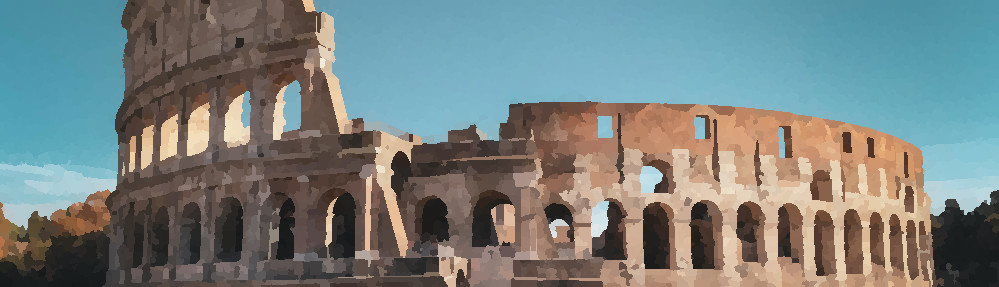
The Venue: Chiostro di San Pietro in Vincoli
A Renaissance cloister on the Esquiline Hill, where centuries of history meet contemporary scholarship.
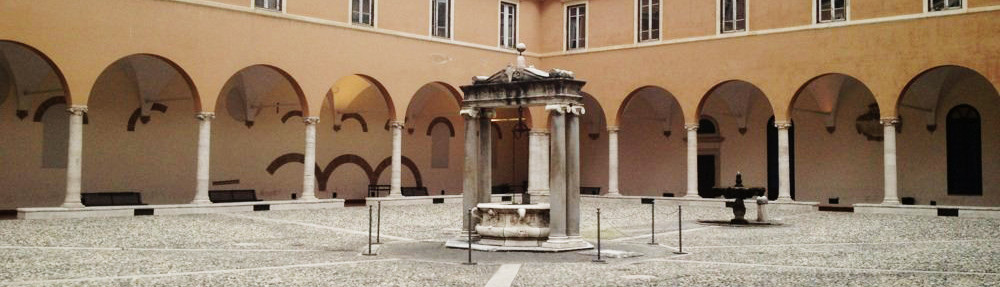
The conference will take place in the Chiostro di San Pietro in Vincoli, the elegant cloister adjoining the celebrated Basilica of San Pietro in Vincoli (Saint Peter in Chains). Built in the 5th century to house the chains said to have bound the Apostle Peter, the basilica is one of Rome’s most ancient places of worship. The cloister itself took its present Renaissance form during the major renovations commissioned by Cardinal Giuliano della Rovere, who would go on to become Pope Julius II.
The basilica is also home to one of the world’s most iconic sculptures: Michelangelo’s Moses, the centrepiece of Julius II’s monumental tomb – just steps away from the conference rooms.
The Ancient Origins of the Site
The Oppian Hill, where the conference venue stands, has been inhabited since the earliest days of Rome. In archaic times the area, lying outside the Servian Walls, served as a necropolis. During the Imperial age, the hill saw the construction of the Porticus Liviae and the celebrated Gardens of Maecenas. After the great fire of 64 AD, Emperor Nero expropriated vast tracts of land to build his Domus Aurea, which remained in use until a second fire damaged it in 104 AD. On its buried remains rose the Baths of Titus and, in 109 AD, the Baths of Trajan – the first great Roman thermae, designed by Apollodorus of Damascus. The surrounding streets – Via delle Sette Sale, Via delle Terme di Tito, Via delle Terme di Traiano – still bear witness to these ancient monuments.
The Basilica of San Pietro in Vincoli
In 442 AD, Licinia Eudoxia – daughter of Emperor Theodosius and young wife of Valentinian III – founded the Basilica of San Pietro in Vincoli (Saint Peter in Chains) on the Oppian Hill. The church was built to enshrine a precious relic: the chains said to have bound the Apostle Peter during his imprisonments in Jerusalem and Rome, which according to tradition miraculously fused together when brought into contact by Pope Leo I. Over the following centuries, powerful Roman families – the Equizi, Frangipane, Capocci, Annibaldi, and Borgia – established themselves on the hill around the basilica. Of the Borgia presence, a hall with a triple window and balcony resting on the Arch of San Pietro in Vincoli still survives today.
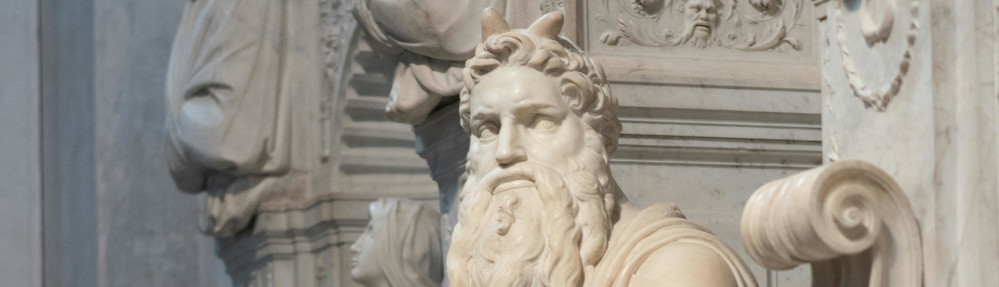
The basilica is also home to one of the most celebrated masterpieces in the history of art: Michelangelo’s Moses (c. 1513–1515), the monumental marble sculpture created as the centrepiece of the tomb of Pope Julius II. Originally conceived as part of a far grander funerary project, the figure of Moses – with its intense gaze and extraordinary physical power – has captivated visitors for five centuries and remains just steps away from the conference rooms.
The Chiostro and the Faculty of Engineering
The cloister adjoining the basilica was built – or substantially renovated – by the Della Rovere family between 1510 and 1520, in a style that echoes the Quattrocento. Its attribution is a matter of scholarly debate: according to Vasari, the portico and the well are the work of Giuliano and Antonio da Sangallo, while Giovannoni attributed them to Giuliano Leni, an assistant of Bramante.
“According to Vasari, the portico of the Chiostro and the well are the work of Giuliano and Antonio da Sangallo, while according to Giovannoni they are the work of Giuliano Leni, assistant to Bramante.”
In 1873, following Italian unification, the School of Engineering moved into the former monastery of the Lateran Canons annexed to the basilica. Over the following decades the complex was progressively enlarged — with buildings for the Institutes of Chemistry (1895), Electrical Engineering (1908), and a major expansion designed by Prof. G.B. Milani in 1918 that organised the campus around four courtyards, one of which is the historic Chiostro itself. In the 1980s, working with the Soprintendenza ai Beni Culturali, the Faculty fully reopened the Chiostro by removing glass enclosures, and reclaimed historic rooms such as the former refectory and the frescoed hall, which today serve as spaces for events, conferences, and lectures.
Getting to the conference venue
- The closest stop is the Colosseum Metropolitan station. You can reach this stop using the metropolitan line B or C. From the subway station, it is a 4-minute walk (< 300 meters) to the conference venue (a walking route can be found at the Citymapper).
- Another option is to walk from the Termini station, the main train station of Rome where the Leonardo Express train arrives from the Fiumicino airport, for about 25 minutes (< 1300 meters, downhill) to the conference venue (a walking route can be found at the Citymapper).
- Alternative stop is the Manzoni station. You can reach this stop using the metropolitan line A. From the subway station, it is a 20-minute walk (< 1500 meters) to the conference venue (a walking route can be found at the Citymapper).
Access to buses, trams, trolleybuses and metro lines is possible also with digital cards on NFC-enabled devices (smartphones, smartwatches, wearables). You can use a contactless credit, debit or prepaid card, via the Tap&Go system instead of acquiring a public transit ticket (BIT). Tap & Go ® applies the most convenient fare based on the number of 100-minute BIT tickets purchased with the service over a 24-hour period. If you exceed four 100-minute BITs, at the sixth you will be charged a 24-hour Roma ticket for € 8,50, which is cheaper than six BIT tickets. The 24 hours of validity of the ticket will be calculated starting from the time of the first tap.